
Choosing between the Serengeti National Park and the Ngorongoro Conservation Area is one of the toughest—and most common—decisions for anyone planning a Tanzanian safari. These two world-famous destinations are adjacent, linked by the same vast ecosystem, yet they offer completely different safari experiences.
Your perfect safari depends on your priorities: Do you seek the drama of the Great Migration over endless plains, or the guaranteed, intense wildlife concentration within a stunning natural bowl?
Here is a detailed comparison to help you decide which African icon holds the key to your dream safari.
The Canvas: Scale and Geography
The fundamental difference between these two destinations is their size and geography, which dictates almost everything else about the experience.
The Serengeti is about the sheer scale of nature. Its name, derived from the Maasai word Siringet, means “the place where the land runs on forever,” and it delivers on that promise. Encompassing over 14,750 km2, the Serengeti is a mosaic of rolling savannah, acacia woodlands, riverine forests, and unique granite kopjes. The safari vibe here is one of wilderness and exploration, requiring long drives and offering the thrilling feeling of tracking and finding wildlife spread across enormous, boundless distances.
Conversely, the Ngorongoro Conservation Area is centered on the awe-inspiring Ngorongoro Crater, the world’s largest intact volcanic caldera. This UNESCO World Heritage site is about intensity and focus. The massive crater walls drop 600 meters to the floor, creating a natural enclosure of only about 260 km2. The geography here is visually dramatic, offering concentrated viewing in a contained natural amphitheater where less time is spent searching and more time is dedicated to observing.
The Wildlife: The Migration vs. The Big Five
Both parks are prime safari spots, but they excel in different areas of game viewing.
The Serengeti’s undisputed star is the Great Wildebeest Migration, an annual, circular journey of over 1.5 million wildebeest, zebra, and gazelles. The timing of your visit dictates where you’ll see the herds—be it the dramatic river crossings in the north or the calving season in the south. The park also boasts Africa’s largest lion population and provides the best chance for viewing elusive cheetahs across its open plains. The wildlife experience is dictated by movement and seasonal drama.
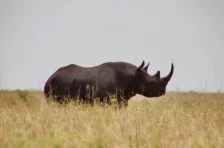
In contrast, the Ngorongoro Crater, often dubbed the “Garden of Eden,” holds an incredibly high density of resident wildlife year-round. It is arguably the best single location in Tanzania for a reliable, single-day viewing of the Big Five (Lion, Leopard, Elephant, Buffalo, and critically endangered Black Rhino). The rhino is the key differentiator; you have an excellent chance of spotting it here, while sightings in the Serengeti are rarer. This ecosystem is so distinct that, due to the steep walls, giraffes are generally absent from the crater floor.
When to Go: Seasonal Peaks and Year-Round Access
The optimal time for a safari varies between the two.
The Serengeti experience is heavily seasonal. The Dry Season (June–October) is often considered the best for clear game viewing as vegetation thins and for witnessing the famed river crossings. However, the Calving Season (January–March) in the south offers fantastic predator action. To truly explore the different zones and follow the migration, you usually need a minimum of three, often four to six, days.
The Ngorongoro Crater is excellent year-round because the wildlife is resident. While the Dry Season sees animals gather at central water sources, making spotting easy, the Green Season (November–May) offers lush scenery and fewer crowds. A single full-day descent into the crater is usually enough for a comprehensive experience, meaning one to two days is sufficient here. Furthermore, it is much more accessible, being a shorter drive (≈3.5 hours) from Arusha, making it an ideal stop. The Serengeti, being more remote, typically requires a longer drive or a domestic flight.
Understanding Budget and Logistics
While both destinations cater to all budgets, their inherent logistics create distinct pricing tiers.
The Serengeti offers a huge range of accommodation, from public campsites to exclusive mobile camps. However, the sheer size and remoteness, especially for luxury and mobile camps, often make it the more expensive destination overall due to the high logistical costs and park fees associated with such a vast area.
Ngorongoro accommodation concentrates around the Crater rim or the nearby town of Karatu. Lodges on the Crater rim command a premium price for their spectacular views. Critically, Ngorongoro charges a separate vehicle descent fee on top of the conservation fees. This can add a significant, non-negotiable cost to your safari package.
Making Your Decision
To summarize your choice:
Choose the Serengeti if you: prioritize witnessing the Great Migration drama, desire the truly epic, boundless African wilderness experience, and have four or more nights to dedicate to your safari.
Choose the Ngorongoro Crater if you: want the highest chance of seeing the Big Five, including the critically endangered Black Rhino, are short on time (it’s perfect for a one-day stop), or prioritize high-density, close-up wildlife viewing in a visually stunning, contained setting.
The Verdict: For most first-time travelers with enough time, the best option is to combine both! Start with the intense, reliable viewing of the Ngorongoro Crater, and then move north to the sweeping plains and migratory herds of the magnificent Serengeti. It is the ultimate pairing for a complete Tanzanian safari adventure.